
Stress to Beat Stress – How Cold Baths Train Your Brain
How Cold Baths Train Your Brain
If I told you that sitting in freezing water could be good for your mental health, you’d probably laugh. It sounds more like a dare than a wellness practice. But surprisingly, cold baths have been shown to significantly reduce symptoms for people dealing with anxiety disorders and chronic stress. So how could something so incredibly uncomfortable possibly be helpful? Let’s find out!
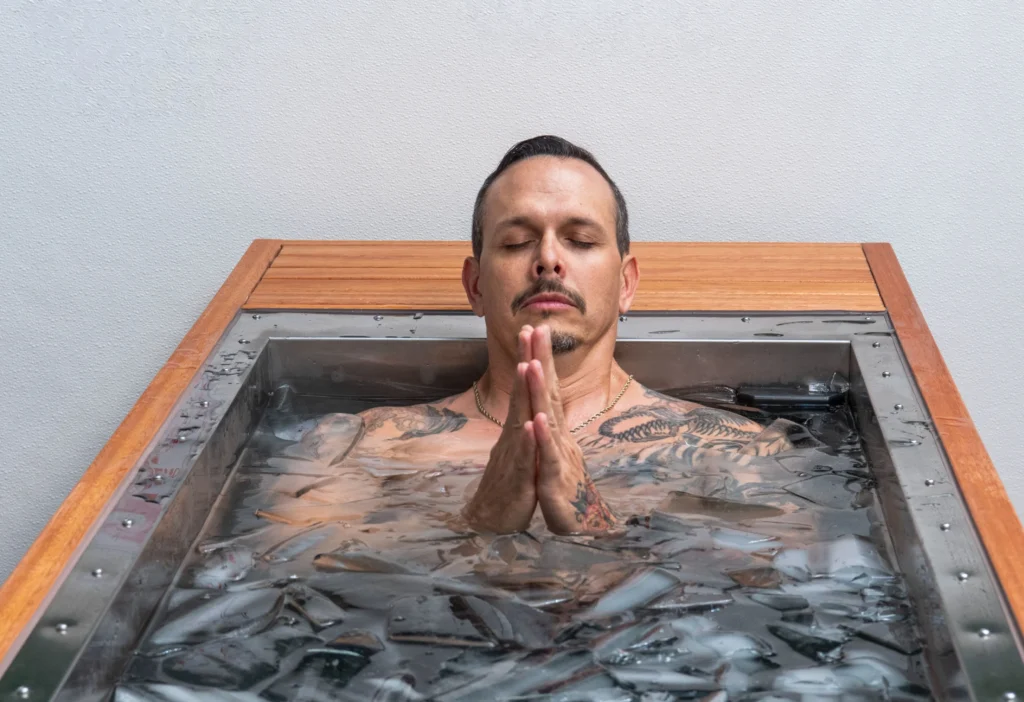
Anxiety: Fear is the Answer
Why do we experience anxiety or stress? It really comes down to the fear of the unknown. Think about it: you might feel anxious before a job interview because you don’t know how it will go—whether you’ll stumble over your words or whether the interviewer will even be friendly. Test anxiety works the same way. You don’t know what will be on the exam, how hard it will be, or whether you’ll pass or fail. Or maybe you’ve received that vague email from your boss asking to “talk,” and your mind immediately jumps to the worst-case scenario: I’m going to get fired. Then it turns out they just wanted to compliment your work or ask for your input. In each of these moments, stress and anxiety aren’t caused by what’s actually happening, but by uncertainty—the fear of not knowing what comes next.
Cold Water for Anxiety
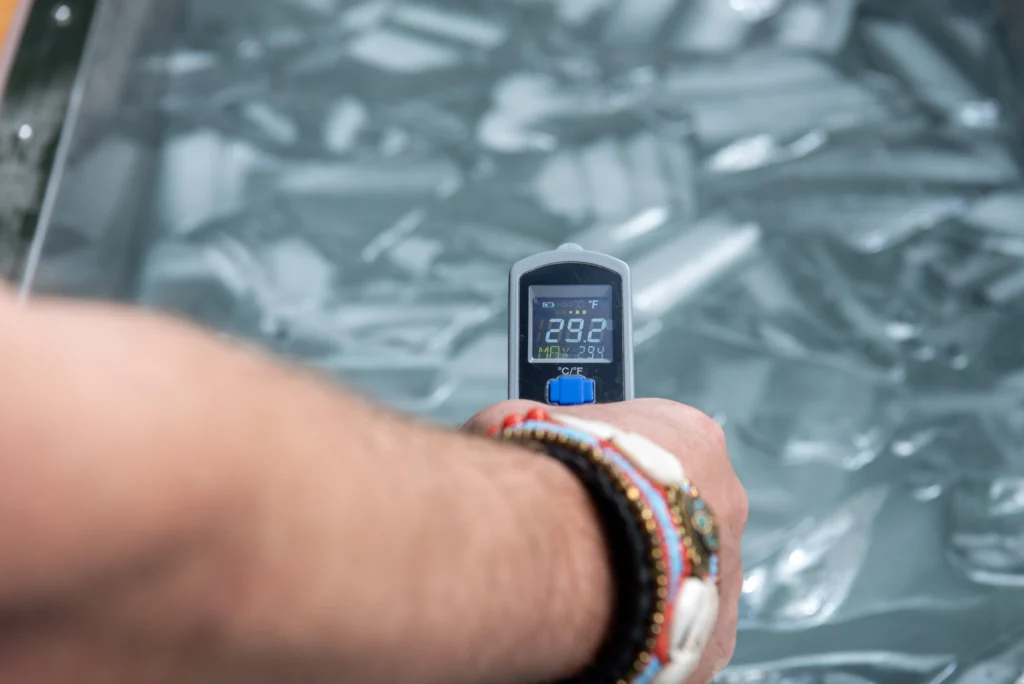
In recent years, a new way of managing anxiety symptoms has started to gain attention: cold water immersion. Surprisingly, it’s been shown to help reduce symptoms not only for those with anxiety disorders, but also for people facing everyday stressors like homework, traffic, and endless chores at home.
As you might expect, plunging into freezing water puts stress on both your body and your mind. But as your body begins to adjust to the temperature, your nervous system shifts from the sympathetic “fight-or-flight” mode to the parasympathetic “rest-and-digest” mode. This happens because your body is learning how to handle stress—in this case, the cold—and realizing it doesn’t need to resist it. Rather than resisting, your body works to preserve homeostasis, its system for keeping internal conditions steady. In other words, rather than battling the cold, your body works to protect and regulate itself.
The more you practice cold water immersion, the more your body adapts—not just to the cold, but to stress in everyday life. The way your sympathetic nervous system reacts to icy water is the same way it responds to stressful situations, like merging onto the I-10 during rush hour.
Routine for Psychological Benefit
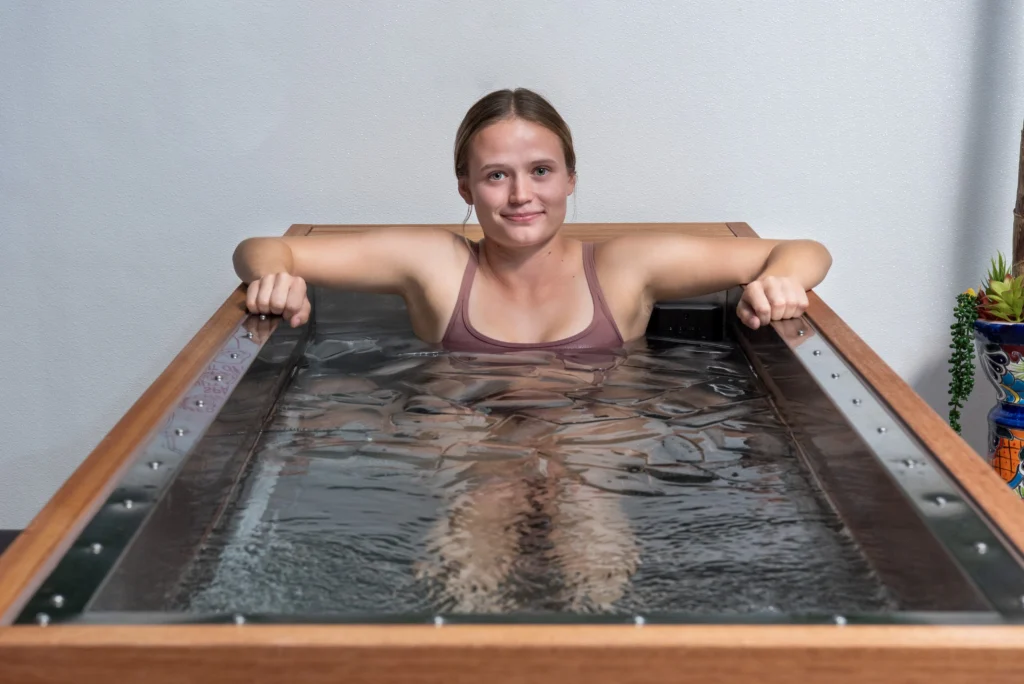
Thomas Seager, PhD, with Morozko Forge, and other researchers have outlined both the psychological benefits of cold baths and the best ways to experience them. Step one:
Find A Temperature That Scares You
Yes, you read that right—you should feel intimidated by the water. But why? Remember: anxiety and stress stem from fear and uncertainty. By stepping into the cold bath and confronting that fear, your brain starts learning how to adapt to stressful situations and overcome fear.
Next, as you ease into the frigid water, you’ll likely experience the “gasp reflex”—that sudden, instinctive inhale. This is where a structured breathing pattern becomes crucial. After 30–45 seconds with the water up to your neck, and while maintaining your breathing technique, your body will shift from the sympathetic “fight-or-flight” mode to the parasympathetic “rest-and-digest” mode. At this point, a third mechanism—the dive reflex—begins to take over, slowing your heart rate and brain waves and putting your brain into a meditative-like state.
Practicing this can carry over to everyday situations. Imagine you’re driving on the I-10, and people are cutting you off and slamming on their brakes. Your heart is racing, thoughts spinning, and breathing shallow. By recognizing that your body is in fight-or-flight mode and consciously slowing your breath—just like in the cold bath—your brain notices the familiar pattern and begins the transition to rest-and-digest. Practice really does make perfect.
Example Routine
Green Room with compression (20 minutes)
Sauna (5-10 minutes)
Coldest bath ≤34º (1-2 minutes)
Sauna (5-10 minutes)
Coldest bath ≤34º (2-3 minutes)
Optional: Hot tub (5-10 minutes)
Red Light (10 minutes)
If you really want to challenge yourself, step into the cold bath immediately after the Green Room. It’s much harder—but even more powerful for building mental resilience.
End cold or hot—it’s your choice. Cold supports natural rewarming, while hot promotes greater muscle relaxation.
A Routine for the Mind AND Body
Looking to experience both the physical and mental benefits of cold baths? This routine delivers both. Remember, it’s your choice whether to end hot or cold.
Sauna (5-10 minutes)
Coldest bath ≤34º (1-3 minutes)
Sauna (5-10)
Warmer bath with the water all the way up the neck 43-50º (3-5 minutes)
Red Light (10 minutes)
Green Room with compression (20 minutes)
Green Room with compression (20 minutes)
Sauna (5-10 minutes)
Warmer bath with the water all the way up the neck 43-50º (3-5 minutes)
Sauna (5-10 minutes)
Coldest bath ≤34º (1-3 minutes)
Optional: Hot Tub 5-10 minutes
Red Light (10 minutes)
| Below you’ll find our schedule and everything Yoga Cold Bath has to offer, as well as a link to Morozko Forge and articles highlighting the mental health benefits of cold baths. Schedule Morozko Forge Methods |